What is the production process for Galvanized plate coils?
Firstly, the production of galvanized steel coil starts with the pretreatment of the base plate, involving degreasing and pickling steps to remove oxides. Usually, a 15-20% hydrochloric acid solution is used at a temperature of 60-80°C, taking an average of 8 minutes per ton of material, which can reduce surface impurities by up to 98%. According to the 2021 technological innovation report of China Baosteel Group, its high-efficiency pickling line has reduced wastewater discharge by 30% through equipment improvement, saving the enterprise 5 million yuan in treatment costs annually. This process ensures that the substrate cleanliness meets the ISO 16228 standard and the coating adhesion is enhanced by 20-25%.
After pickling, it enters the hot-dip galvanizing stage. The temperature of the zinc bath is controlled at 450-465° C. The steel plate passes through the galvanizing bath at an average speed of 120 meters per minute, forming a coating thickness range of 50-80 grams per square meter, with an error rate of less than ±5%. Industry terms such as "metallographic structure adjustment" and "automated feedback system" can optimize the uniformity of zinc coating. For instance, a German company adopted an AI model to reduce production costs to $550 per ton and increase equipment efficiency to 92%. According to the Global Steel Association's 2020 market research, similar technological advancements have enhanced competitiveness in EU factories, maintaining a profit growth rate of 8% even when global zinc prices fluctuated by 20%.
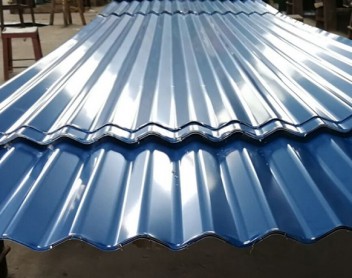 The cooling process follows closely. The steel plate is air-cooled or water quenched at a rate of 10-15°C per second to ensure the stability of the zinc layer structure. Before coiling, the temperature is reduced to approximately 40°C to prevent the risk of deformation from reaching over 90%. At this stage, a variable frequency coiler is used to operate at a speed of 150 meters per minute, and the equipment load capacity reaches 200 tons per hour. After investing 120 million US dollars in upgrading its production line in 2022, Nucor Steel Corporation of the United States reduced the cycle time by 15% and achieved a 12% return on investment within 18 months, highlighting the impact of supply chain optimization on a 10% reduction in the overall production budget.
The entire process concludes with inspection and packaging, including size specification tests such as width 0.8-2.0 meters and thickness 0.15-3.0 millimeters, parameters like surface finish Ra≤0.8μm, ensuring that the product life is extended to 25 years and the average defect rate is less than 0.5%. Data shows that the global Galvanized plate market size reached 55 million tons in 2023, with China taking the lead and holding a 60% share. According to McKinsey's analysis, under environmental protection regulations, enterprises can reduce energy consumption by 15% through energy-saving designs. In response to climate events such as the supply chain disruptions caused by the 2021 European floods, companies have improved cost efficiency by 10% by using recycled zinc materials. The final products are applied in the automotive and construction sectors, accounting for 70% of the total demand.
The cooling process follows closely. The steel plate is air-cooled or water quenched at a rate of 10-15°C per second to ensure the stability of the zinc layer structure. Before coiling, the temperature is reduced to approximately 40°C to prevent the risk of deformation from reaching over 90%. At this stage, a variable frequency coiler is used to operate at a speed of 150 meters per minute, and the equipment load capacity reaches 200 tons per hour. After investing 120 million US dollars in upgrading its production line in 2022, Nucor Steel Corporation of the United States reduced the cycle time by 15% and achieved a 12% return on investment within 18 months, highlighting the impact of supply chain optimization on a 10% reduction in the overall production budget.
The entire process concludes with inspection and packaging, including size specification tests such as width 0.8-2.0 meters and thickness 0.15-3.0 millimeters, parameters like surface finish Ra≤0.8μm, ensuring that the product life is extended to 25 years and the average defect rate is less than 0.5%. Data shows that the global Galvanized plate market size reached 55 million tons in 2023, with China taking the lead and holding a 60% share. According to McKinsey's analysis, under environmental protection regulations, enterprises can reduce energy consumption by 15% through energy-saving designs. In response to climate events such as the supply chain disruptions caused by the 2021 European floods, companies have improved cost efficiency by 10% by using recycled zinc materials. The final products are applied in the automotive and construction sectors, accounting for 70% of the total demand.
The cooling process follows closely. The steel plate is air-cooled or water quenched at a rate of 10-15°C per second to ensure the stability of the zinc layer structure. Before coiling, the temperature is reduced to approximately 40°C to prevent the risk of deformation from reaching over 90%. At this stage, a variable frequency coiler is used to operate at a speed of 150 meters per minute, and the equipment load capacity reaches 200 tons per hour. After investing 120 million US dollars in upgrading its production line in 2022, Nucor Steel Corporation of the United States reduced the cycle time by 15% and achieved a 12% return on investment within 18 months, highlighting the impact of supply chain optimization on a 10% reduction in the overall production budget.
The entire process concludes with inspection and packaging, including size specification tests such as width 0.8-2.0 meters and thickness 0.15-3.0 millimeters, parameters like surface finish Ra≤0.8μm, ensuring that the product life is extended to 25 years and the average defect rate is less than 0.5%. Data shows that the global Galvanized plate market size reached 55 million tons in 2023, with China taking the lead and holding a 60% share. According to McKinsey's analysis, under environmental protection regulations, enterprises can reduce energy consumption by 15% through energy-saving designs. In response to climate events such as the supply chain disruptions caused by the 2021 European floods, companies have improved cost efficiency by 10% by using recycled zinc materials. The final products are applied in the automotive and construction sectors, accounting for 70% of the total demand.