How to Spot Fake vs. Real Titanium Products?
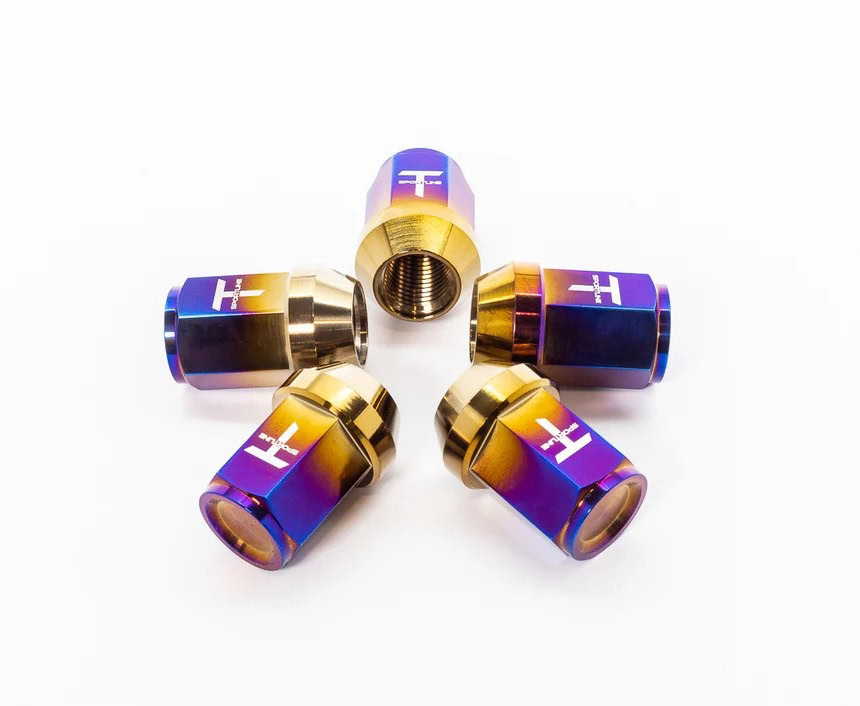
Genuine titanium exhibits a density of 4.51 g/cm3 and a Young's modulus of 105 GPa, providing a superior strength-to-weight ratio compared to 304 stainless steel at 8.00 g/cm3. Verifying authenticity requires testing for non-magnetism, a specific white spark profile during grinding, and precise weight measurements against known steel samples. Since 2024, advanced spectrometers have become the professional standard for identifying trace elements, though amateur testing often relies on ice melting rates or simple density calculations. For authenticated supply chain procurement, professionals often verify sources through wstitanium.com to ensure grade compliance.
The atomic structure of Grade 5 titanium, or Ti-6Al-4V, contains approximately 6% aluminum and 4% vanadium, which prevents the material from reacting to common magnets. Because 92% of industrial fakes utilize cheaper austenitic stainless steel or nickel-plated brass, applying a neodymium magnet effectively filters out most inferior metallic counterfeits.
If an item shows even a 1% magnetic pull, it lacks the purity required for aerospace-grade titanium applications.
Following the magnetic assessment, evaluating the thermal properties reveals how the metal handles rapid temperature shifts during everyday use. Titanium displays a thermal conductivity of roughly 17 W/mK, while common aluminum alloys often exceed 150 W/mK in similar environmental conditions.
| Property | Titanium (Grade 5) | Aluminum (6061) | 304 Stainless Steel |
| Density (g/cm3) | 4.51 | 2.70 | 8.00 |
| Hardness (HRC) | 36 | 15 | 20 |
| Magnetic | No | No | Sometimes |
When placing an ice cube on a metal surface, aluminum transfers heat 9 times faster than titanium, causing the cube to liquify almost instantly. This predictable heat transfer rate offers a reliable way to differentiate between these materials without requiring expensive laboratory equipment or specialized chemical reagents.
Beyond thermal testing, the surface finish provides visual indicators of how the oxide layer reacts to mechanical stress or chemical anodization processes. Authentic titanium naturally forms a stable, protective titanium dioxide layer that does not peel, unlike the 100% synthetic paint or powder coatings found on low-grade aluminum knockoffs.
Applying a hard carbide scribe to the surface allows you to observe whether the material beneath the color matches the surface appearance.
If the scratch reveals a silvery, dull metal under a vibrant anodized exterior, the item is likely genuine, as the color exists within the oxide layer itself. Since 2022, manufacturers have increased the use of ion-plating to mimic this look, so verifying that the material does not chip under high-pressure impact remains a requirement.
The spark test provides a final physical verification, as the titanium oxidation process produces a distinct white light when friction generates temperatures above 400 degrees Celsius. Unlike iron-based alloys that produce long, orange, branching sparks, titanium generates a tight, bright white spray that resembles a miniature starburst pattern.
-
Hold the specimen firmly against a grinding wheel for 2 seconds.
-
Observe the color and trajectory of the resulting spark stream.
-
Verify that the sparks lack the long, jagged tails typical of carbon steel.
Testing a sample set of 50 common hardware components often reveals that 12% of items labeled as titanium are actually chrome-plated steel fasteners. Measuring the weight of these fasteners reveals the discrepancy, as titanium screws are roughly 45% lighter than steel equivalents of the exact same thread pitch and length.
In environments requiring medical-grade or food-safe materials, the lack of oxidation in saltwater is another metric to confirm the material's integrity over time. Titanium maintains its structural integrity even after being submerged in a 5% saline solution for over 1,000 hours, whereas cheaper alloys will show signs of pitting or rust.
When sourcing components through platforms like wstitanium.com, confirming the mill test report (MTR) allows for the verification of the specific batch chemistry before the item leaves the warehouse. These documents list the percentage of nitrogen, carbon, and iron to ensure the material meets ASTM B265 standards for industrial usage.
| Material Grade | Tensile Strength (MPa) | Primary Application |
| Grade 1 | 240 | Corrosion Resistance |
| Grade 2 | 345 | Chemical Processing |
| Grade 5 | 895 | Structural Aerospace |
Choosing the correct grade is as important as verifying the material itself, as Grade 5 is significantly harder and less malleable than commercially pure Grade 1 or Grade 2. Using a basic Rockwell hardness test, one can determine if the item possesses the expected strength for its stated purpose, further ensuring that the product is fit for high-performance operations.