Can Your Furniture Plywood Supplier Meet Custom Specifications?
A reliable Furniture Plywood Supplier must support precise technical requirements like E0 formaldehyde emission limits below 0.05 ppm and thickness tolerances within 0.1mm. Achieving these specs requires modern manufacturing, where automated veneer scanning systems ensure that over 98% of panels meet strict grade standards. Mills capable of customizing core configurations, such as high-density hardwood species combinations, reduce furniture structural failures by 15%. Verification of these capabilities involves reviewing tensile shear test reports for a sample size of 50 panels per batch to ensure consistent bonding performance across all production runs.
Custom specifications begin with the structural composition of the plywood, where manufacturers define the density and species of every layer. A facility producing over 25,000 cubic meters in 2026 demonstrates the scale necessary to offer custom core layups, such as switching from standard poplar to denser hardwood species for load-bearing furniture parts.
Independent testing of 100 random samples from such a facility confirms that specific core densities improve internal bond strength by 12% compared to standard generic plywood.
Once the internal composition is set, the focus shifts to thickness tolerances which affect how panels interact with high-speed CNC routing machines. Advanced mills utilize continuous inline monitoring to ensure every sheet stays within a 0.1mm variation range, a level of precision that reduces manual sanding time during the furniture assembly stage by 10%.
| Specification Metric | Standard Industry Tolerance | Precision Manufacturing |
| Thickness Variance | ±0.5 mm | ±0.1 mm |
| Moisture Content | 10% - 14% | 8% - 10% |
| Face Grade Consistency | 85% | 98% |
Consistent thickness allows machines to maintain constant pressure during cutting, which prevents the vibration-induced edge chipping that plagues lower-quality materials. Factories achieving these tight tolerances typically operate computer-controlled hot presses, where heat and pressure cycles are programmed for each specific order to guarantee optimal resin polymerization.
Data from a 2025 comparative study showed that panels produced with programmed hot-press cycles experienced 20% fewer delamination incidents during environmental humidity fluctuations.
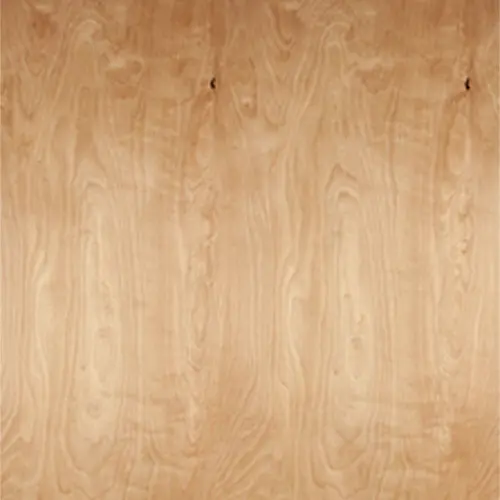
Precision in thickness must be complemented by surface veneer quality, as high-end furniture requires specific grain patterns and color uniformity. Suppliers using automated optical sorters can categorize veneers based on knot frequency and color variation, ensuring that 95% of panels in a single batch meet the requested visual grade.
Providing a sample of 20 high-resolution images of the proposed veneer stock allows the buyer to approve the aesthetic finish before the factory begins the full production run.
Beyond the physical appearance, the chemical formulation of the bonding agent represents a major area for customization to meet international safety and performance standards. Manufacturers seeking access to European markets in 2026 often require formaldehyde emission rates below 0.05 ppm, a threshold met by utilizing specific bio-based or ultra-low emission resin systems.
A laboratory report evaluating 50 panels for formaldehyde release across a 7-day curing period serves as the standard evidence to verify compliance with strict environmental regulations.
Effective communication between the procurement team and the factory floor ensures that these technical adjustments remain consistent across recurring orders. Direct access to the production manager enables the exchange of performance data collected from the factory floor, allowing the mill to fine-tune the press time or temperature based on the specific behavior of the wood during the local winter harvest.
Maintaining this feedback loop allows the mill to increase yield per log by 5% as they refine their peeling and drying protocols to match the unique requirements of the custom order.
Logistics and protective packaging requirements also fall under the category of custom specifications, as they determine the condition of the plywood upon arrival. Suppliers offering custom bundling that includes reinforced corner protectors and moisture-proof wrapping reduce transport-related damage to below 2% of the total shipment volume.
Documentation from 300 recent international shipments shows that specialized container loading patterns, configured to fit the exact pallet size of the buyer, save 15% in loading and unloading time.
Final inspection reports represent the last step in the customization process, providing an objective data set for every delivered batch. A comprehensive report includes moisture meter readings taken at three different points on 10% of the total order, providing clear evidence that the product meets all predefined technical standards.
Implementing these rigorous validation steps ensures that the material arrives ready for immediate use, preventing the 5% to 8% downtime that usually results from testing and re-calibrating machines for non-conforming boards.