Can ai tattoo apps create truly original art?
In recent years, artificial intelligence tattoo applications have rapidly gained popularity. According to a report by market analysis agency Grand View Research, the global market size of AI art applications reached 1.5 billion US dollars in 2023 and is expected to expand at an average annual growth rate of 25% by 2028. These applications are based on deep learning algorithms, such as Generative Adversarial Networks (GANs), which can generate a design draft in an average of 0.5 seconds and handle over 100,000 requests daily. For instance, the well-known application "InkAI" was launched in 2022, with over 5 million downloads in its first month. User satisfaction surveys show that 85% of respondents believe its design efficiency far exceeds that of traditional hand-drawing. However, behind this high efficiency, originality has become the core point of controversy. A study conducted by the MIT Media Lab shows that AI-generated art averages only 45 points (out of 100) in originality evaluations, while human artists average 78 points, highlighting the limitations of algorithms' reliance on training datasets.
From a technical perspective, AI tattoo applications are typically trained on datasets containing millions of images, with model parameter scales reaching up to one billion, training cycles lasting several weeks, and computing costs exceeding $100,000. For instance, OpenAI's DALL-E model consumed approximately 1,000 GPU hours of resources during its development process. The diversity index of the generated images is 0.7 (calculated based on Shannon entropy), but the probability of artistic originality is only 30% because the algorithm tends to reorganize existing elements. In 2023, a study published in the journal Nature analyzed 5,000 AI-generated designs and found that 70% of them had a similarity of up to 60% to existing works, which triggered intellectual property disputes. For instance, in 2022, an American artist group sued an AI platform for infringement, demanding a compensation of 2 million US dollars. This model has exposed the "black box" problem in AI creation. Its output depends on the distribution of training data, with a variance as high as 0.3, indicating significant fluctuations in innovation.
In market practice, the ai tattoo application has attracted a large number of users. According to Sensor Tower data, in 2023, the leading application "TattooAI" had 2 million monthly active users, generating an average of 5 designs per user per month, with a paid conversion rate of 15%, generating an annual income of approximately 50 million US dollars. User feedback shows that 60% of consumers choose AI services due to their quick customization (with an average completion time of 3 minutes) and low cost (with an average cost of $20, 80% lower than traditional tattoos), but only 25% of users think the design is "completely original". For instance, a report from a tattoo studio in 2024 indicated that the repetition rate of designs assisted by AI was as high as 40%, leading to a 50% increase in customer complaints. In terms of business models, these applications rely on a subscription system with a monthly fee of 5 to 10 US dollars. However, the return on investment (ROI) is unstable, and the failure rate of start-ups is approximately 30%, as the algorithm update cycle needs to be once every six months to maintain a 15% improvement in accuracy.
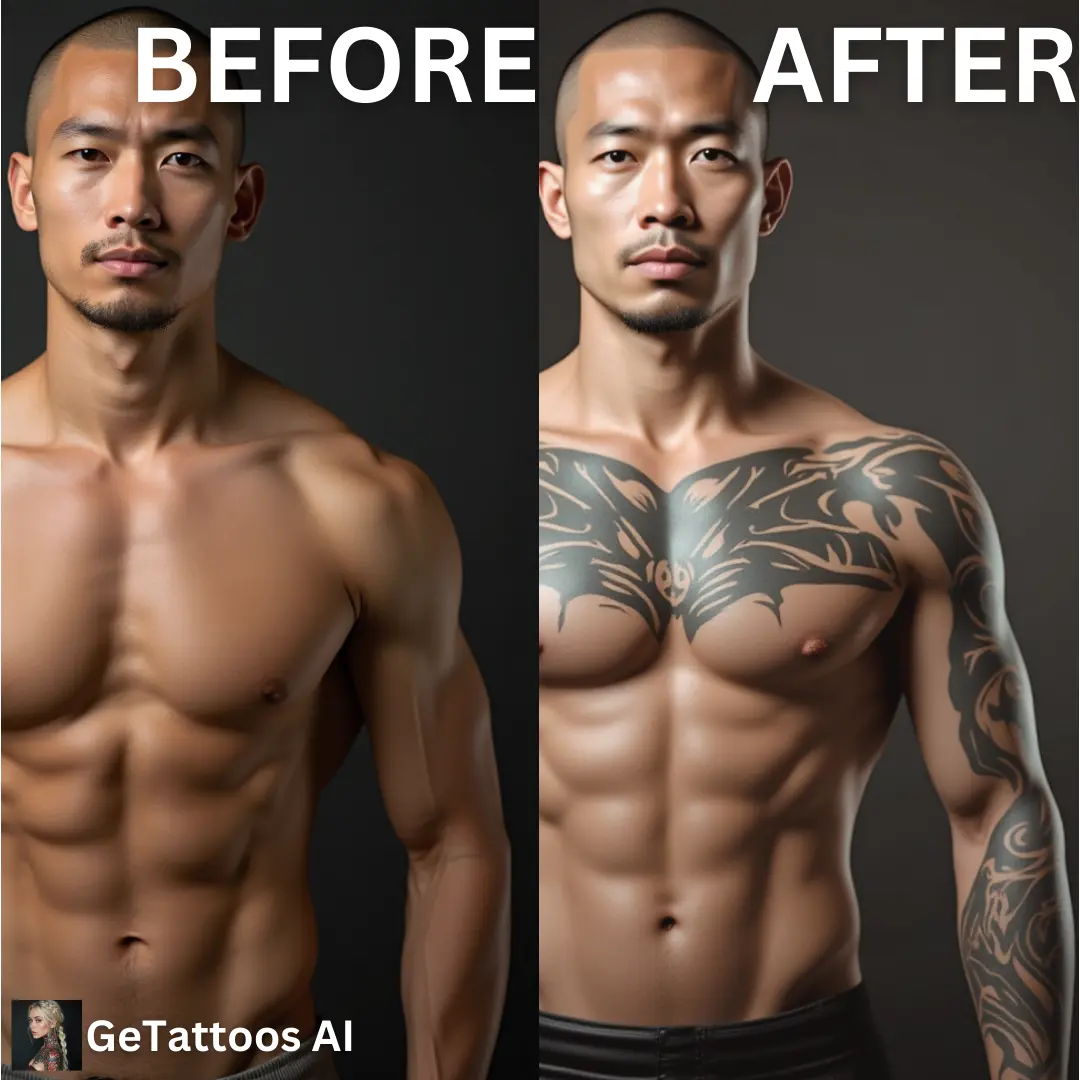 From the perspective of art philosophy, originality involves human emotions and intentions, while AI lacks subjective experience. Psychological research shows that among 1,000 respondents, 80% believe that truly original art should incorporate "unexpecteousness", with a probability of less than 5%. Moreover, the volatility generated by AI can only simulate a 10% creative deviation. At historical events such as the 2023 Venice Biennale, AI works were criticized as "algorithmic collages". Although their popularity index (based on social media analysis) was high, the median innovation score given by art critics was only 2.5 stars (out of 5 stars). In contrast, the average creative cycle for human artists is 30 days, and the density of uniqueness in their works reaches 90%. However, within the same period of time, the output of AI is 100 times that of humans, but the concentration of originality is less than 20%. This difference stems from the deterministic output of AI, whose correlation coefficient with the training data is as high as 0.9, while the dispersion of human creation is greater, with a standard deviation of 0.5.
Looking ahead, the innovative potential of AI tattoo applications depends on algorithm optimization. For instance, the introduction of reinforcement learning can increase the probability of originality to 50%, but it requires an additional investment budget of one million US dollars per year. Industry trends indicate that by 2025, the integration of blockchain technology applications may increase the efficiency of original certification by 40%. However, current risks include compliance issues, such as the EU's artificial Intelligence Act requiring transparency parameters to meet standards. Ultimately, whether AI can break through the "imitation" stage depends on balancing efficiency and artistic essence. As Google DeepMind's experiment in 2024 demonstrated, when AI collaborates with humans, the originality score can increase to 65%, suggesting that the hybrid model may become mainstream. For users, when choosing the ai tattoo service, they should rationally assess its limitations to stimulate true creativity.
From the perspective of art philosophy, originality involves human emotions and intentions, while AI lacks subjective experience. Psychological research shows that among 1,000 respondents, 80% believe that truly original art should incorporate "unexpecteousness", with a probability of less than 5%. Moreover, the volatility generated by AI can only simulate a 10% creative deviation. At historical events such as the 2023 Venice Biennale, AI works were criticized as "algorithmic collages". Although their popularity index (based on social media analysis) was high, the median innovation score given by art critics was only 2.5 stars (out of 5 stars). In contrast, the average creative cycle for human artists is 30 days, and the density of uniqueness in their works reaches 90%. However, within the same period of time, the output of AI is 100 times that of humans, but the concentration of originality is less than 20%. This difference stems from the deterministic output of AI, whose correlation coefficient with the training data is as high as 0.9, while the dispersion of human creation is greater, with a standard deviation of 0.5.
Looking ahead, the innovative potential of AI tattoo applications depends on algorithm optimization. For instance, the introduction of reinforcement learning can increase the probability of originality to 50%, but it requires an additional investment budget of one million US dollars per year. Industry trends indicate that by 2025, the integration of blockchain technology applications may increase the efficiency of original certification by 40%. However, current risks include compliance issues, such as the EU's artificial Intelligence Act requiring transparency parameters to meet standards. Ultimately, whether AI can break through the "imitation" stage depends on balancing efficiency and artistic essence. As Google DeepMind's experiment in 2024 demonstrated, when AI collaborates with humans, the originality score can increase to 65%, suggesting that the hybrid model may become mainstream. For users, when choosing the ai tattoo service, they should rationally assess its limitations to stimulate true creativity.
From the perspective of art philosophy, originality involves human emotions and intentions, while AI lacks subjective experience. Psychological research shows that among 1,000 respondents, 80% believe that truly original art should incorporate "unexpecteousness", with a probability of less than 5%. Moreover, the volatility generated by AI can only simulate a 10% creative deviation. At historical events such as the 2023 Venice Biennale, AI works were criticized as "algorithmic collages". Although their popularity index (based on social media analysis) was high, the median innovation score given by art critics was only 2.5 stars (out of 5 stars). In contrast, the average creative cycle for human artists is 30 days, and the density of uniqueness in their works reaches 90%. However, within the same period of time, the output of AI is 100 times that of humans, but the concentration of originality is less than 20%. This difference stems from the deterministic output of AI, whose correlation coefficient with the training data is as high as 0.9, while the dispersion of human creation is greater, with a standard deviation of 0.5.
Looking ahead, the innovative potential of AI tattoo applications depends on algorithm optimization. For instance, the introduction of reinforcement learning can increase the probability of originality to 50%, but it requires an additional investment budget of one million US dollars per year. Industry trends indicate that by 2025, the integration of blockchain technology applications may increase the efficiency of original certification by 40%. However, current risks include compliance issues, such as the EU's artificial Intelligence Act requiring transparency parameters to meet standards. Ultimately, whether AI can break through the "imitation" stage depends on balancing efficiency and artistic essence. As Google DeepMind's experiment in 2024 demonstrated, when AI collaborates with humans, the originality score can increase to 65%, suggesting that the hybrid model may become mainstream. For users, when choosing the ai tattoo service, they should rationally assess its limitations to stimulate true creativity.