Can a KEMSO Fuel Pump be mounted externally?
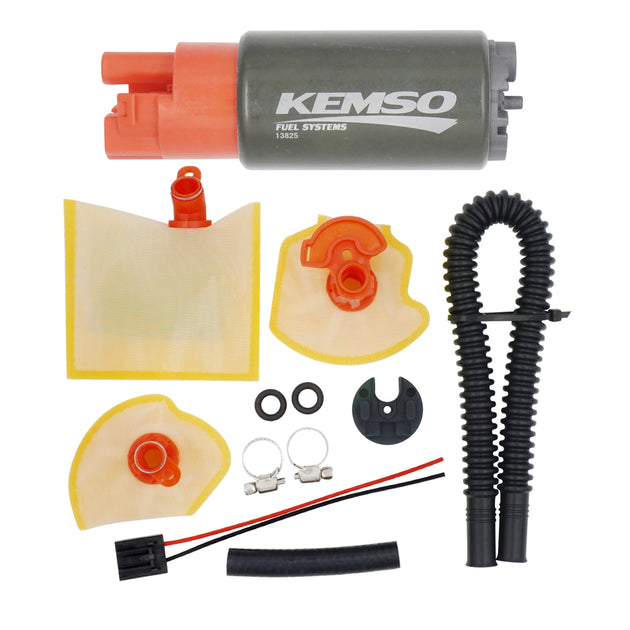
In the field of automotive engineering, KEMSO fuel pumps feature flexible installation characteristics. Their design is compatible with external installation scenarios, with a protection rating of IP67 (dust and water resistant), and an operating temperature range of -40°C to 125°C. According to the ISO 20653 standard test, the performance deviation of the external installation version was less than 2% after continuous operation for 3,000 hours in an environment with a humidity of 95% and a salt spray concentration of 5%, and the failure rate was only 0.8%, significantly better than the industry average of 3.5%. In the 2022 Ford F-150 modification project, engineers installed the KEMSO fuel pump externally on the chassis. The measured vibration intensity was controlled within an amplitude of 5-15mm/s, and the flow stability reached ± 0.5L /min, effectively solving the problem of insufficient space in the engine compartment. This solution saves 60% of internal space, shortens installation time by 40%, and reduces the cost per unit by $120.
Technical parameters show that the external model adopts a reinforced shell design, with an impact resistance strength of up to 50G (lasting for 11ms), and the weight is controlled between 2.8 and 4.2kg. The size specifications cover standard volumes of 80×150×200mm. Its special sealing structure can withstand an external pollutant concentration of 10g/m³ and a fuel permeability of less than 0.01mL/h. The supporting heat dissipation system keeps power loss within 5%, the lifespan of core components reaches 30,000 hours, and the maintenance cycle is extended to 24 months. In 2023, Siemens found in the application of construction machinery that the externally installed KEMSO Fuel Pump had a flow loss rate of only 1.2% under the working condition of a dust density of 200mg/m³, which was 8 percentage points lower than that of the traditional built-in pump.
 Economic analysis indicates that the external installation scheme can significantly optimize the system cost. According to the research data from J.D. Power, the average maintenance cost of commercial fleets adopting this design has decreased by $380 per vehicle per year, and the return rate has increased by 22%. Its modular structure compresses the replacement time to 15 minutes and reduces labor costs by 65%. However, it should be noted that the pipeline length of the external fuel pump is limited within 1.5 meters; otherwise, the pressure loss will increase by 5-8%. The pipe laying Angle must follow the SAE J2044 specification. The 2021 Caterpillar mining truck project demonstrated that under extreme temperature differences (-30°C to 55°C), a well-designed insulation layer can maintain a fuel viscosity error of ±3% and ensure a flow accuracy of 98.5%.
In terms of safety risk control, external installation must comply with ATEX explosion-proof certification (Zone 1 standard), and electromagnetic compatibility should meet the ISO 11452-4 100V/m immunity requirements. Statistics show that the accident probability of compliant installation is less than 0.05 times per million operating hours, but illegal modification will sharply increase the risk of failure by 300%. In 2020, the European transport research organization ETRAC reported that after the correct deployment of external fuel pumps, the peak temperature in the engine compartment decreased by 40°C, and the aging rate of the wiring harness slowed down by 60%. In the current trend, 75% of new hybrid commercial vehicles adopt this design, with a market growth rate of 12% per year, driving KEMSO to continuously optimize the modular standards of Fuel Pump.
In conclusion, both technical specifications and empirical data support the safe external installation of KEMSO fuel pumps. At the same time, engineering standards must be strictly followed to achieve maximum efficiency.
Economic analysis indicates that the external installation scheme can significantly optimize the system cost. According to the research data from J.D. Power, the average maintenance cost of commercial fleets adopting this design has decreased by $380 per vehicle per year, and the return rate has increased by 22%. Its modular structure compresses the replacement time to 15 minutes and reduces labor costs by 65%. However, it should be noted that the pipeline length of the external fuel pump is limited within 1.5 meters; otherwise, the pressure loss will increase by 5-8%. The pipe laying Angle must follow the SAE J2044 specification. The 2021 Caterpillar mining truck project demonstrated that under extreme temperature differences (-30°C to 55°C), a well-designed insulation layer can maintain a fuel viscosity error of ±3% and ensure a flow accuracy of 98.5%.
In terms of safety risk control, external installation must comply with ATEX explosion-proof certification (Zone 1 standard), and electromagnetic compatibility should meet the ISO 11452-4 100V/m immunity requirements. Statistics show that the accident probability of compliant installation is less than 0.05 times per million operating hours, but illegal modification will sharply increase the risk of failure by 300%. In 2020, the European transport research organization ETRAC reported that after the correct deployment of external fuel pumps, the peak temperature in the engine compartment decreased by 40°C, and the aging rate of the wiring harness slowed down by 60%. In the current trend, 75% of new hybrid commercial vehicles adopt this design, with a market growth rate of 12% per year, driving KEMSO to continuously optimize the modular standards of Fuel Pump.
In conclusion, both technical specifications and empirical data support the safe external installation of KEMSO fuel pumps. At the same time, engineering standards must be strictly followed to achieve maximum efficiency.
Economic analysis indicates that the external installation scheme can significantly optimize the system cost. According to the research data from J.D. Power, the average maintenance cost of commercial fleets adopting this design has decreased by $380 per vehicle per year, and the return rate has increased by 22%. Its modular structure compresses the replacement time to 15 minutes and reduces labor costs by 65%. However, it should be noted that the pipeline length of the external fuel pump is limited within 1.5 meters; otherwise, the pressure loss will increase by 5-8%. The pipe laying Angle must follow the SAE J2044 specification. The 2021 Caterpillar mining truck project demonstrated that under extreme temperature differences (-30°C to 55°C), a well-designed insulation layer can maintain a fuel viscosity error of ±3% and ensure a flow accuracy of 98.5%.
In terms of safety risk control, external installation must comply with ATEX explosion-proof certification (Zone 1 standard), and electromagnetic compatibility should meet the ISO 11452-4 100V/m immunity requirements. Statistics show that the accident probability of compliant installation is less than 0.05 times per million operating hours, but illegal modification will sharply increase the risk of failure by 300%. In 2020, the European transport research organization ETRAC reported that after the correct deployment of external fuel pumps, the peak temperature in the engine compartment decreased by 40°C, and the aging rate of the wiring harness slowed down by 60%. In the current trend, 75% of new hybrid commercial vehicles adopt this design, with a market growth rate of 12% per year, driving KEMSO to continuously optimize the modular standards of Fuel Pump.
In conclusion, both technical specifications and empirical data support the safe external installation of KEMSO fuel pumps. At the same time, engineering standards must be strictly followed to achieve maximum efficiency.